
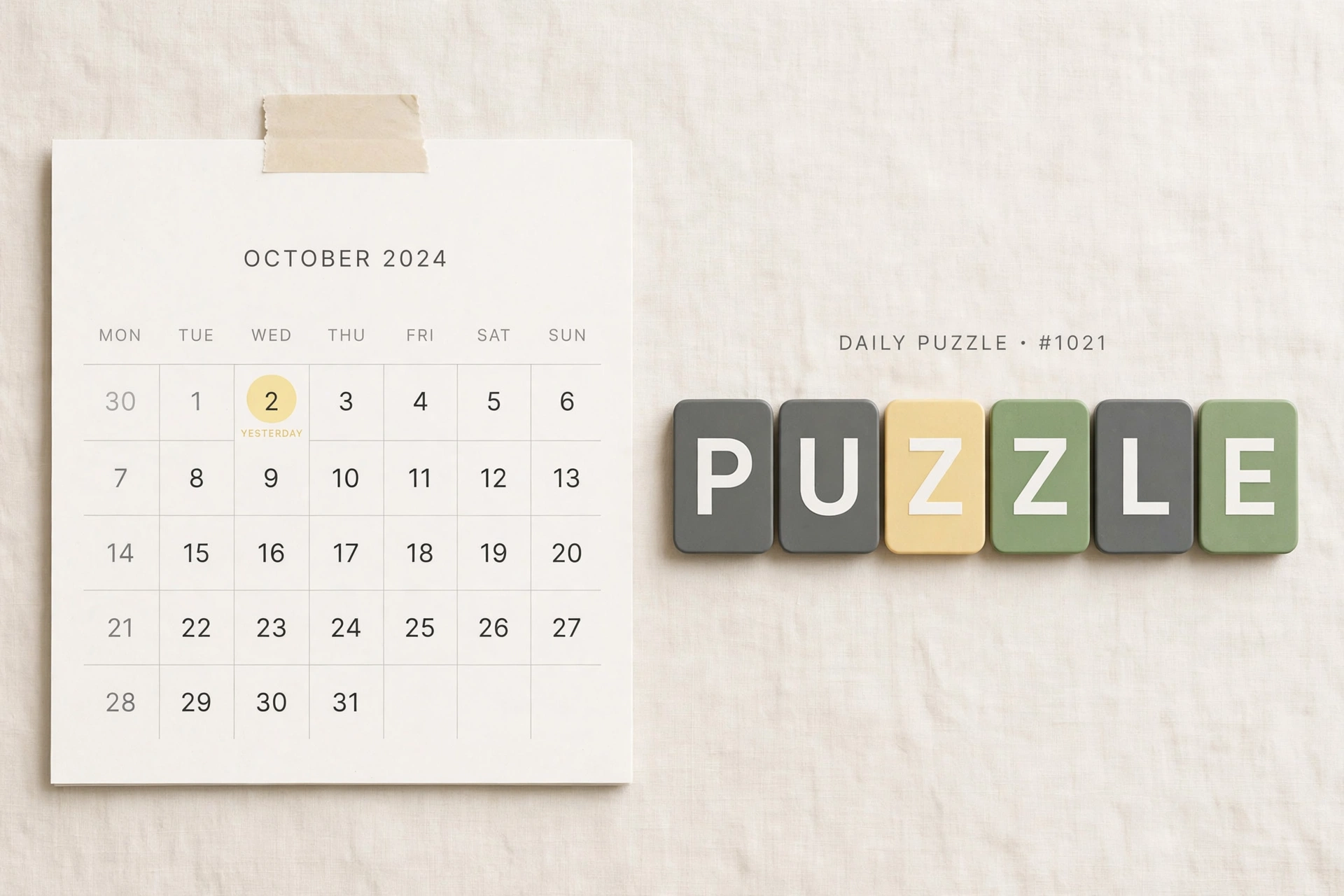
Missed yesterday’s puzzle? You’ll find the previous day’s wordle answer in the Yesterday’s Wordle panel on our wordle today homepage — updated every midnight when the new puzzle goes live. Below: how Wordle’s daily cycle works, how to use answer archives to sharpen your game, how to replay missed puzzles for practice, and the spoiler etiquette every player should know.
How Wordle’s Daily Cycle Works
Wordle publishes exactly one puzzle per day and resets at midnight in your local time zone. When the clock rolls over, today’s wordle answer is replaced by a brand-new puzzle, and the old answer vanishes from the official game. That single shared puzzle is what makes Wordle a daily ritual — everyone, everywhere, wrestles with the same five letters.
The format is deliberately simple. Created by Josh Wardle and acquired by a major newspaper in 2022, the game gives you six guesses to find a five-letter word, with colored tiles — gray, yellow, green — as your only feedback. There are no levels, no power-ups, and no way to bank extra puzzles. This scarcity is the whole point: one puzzle a day keeps the game from becoming a grind and turns each solution into a small shared event. It’s also why the game spread so fast — everyone gets the same word, so every conversation about “today’s puzzle” is instantly relatable. Understanding the cycle matters because everything about “yesterday’s answer” flows from it — the official game looks forward only, which is why third-party panels and archives exist to look back.
How to Check What You Missed
The official game never displays past answers, so the easiest way to find yesterday’s word is the Yesterday’s Wordle panel on our homepage. Every midnight, the previous day’s answer moves into the panel automatically, giving you a permanent rolling record of the most recent solution — no digging required.
Checking takes seconds:
- Open the homepage — the panel sits alongside today’s puzzle, hints, and answer tools.
- Find “Yesterday’s Wordle” — it’s clearly labeled, separate from today’s game so there’s no spoiler confusion.
- Read the answer — the previous day’s solution is shown in full, often with a note on its difficulty.
The panel updates on the same midnight schedule as the game itself, so it’s always exactly one day behind — never stale, never ahead. If you missed several days in a row, the panel shows only the most recent one, which is why building the daily habit (see below) beats playing catch-up. For players who want deeper history, the panel pairs naturally with community answer archives — but for the everyday “what did I miss?” question, one glance is all it takes.
Why Yesterday’s Answer Still Matters
A missed answer is free training data. Testing yourself retroactively against yesterday’s hints sharpens deduction, reviewing past answers reveals the letter patterns Wordle favors, and settling “what was yesterday’s word?” debates keeps group chats honest. Yesterday’s puzzle isn’t dead — it’s a practice round.
Many players like to:
- Test themselves retroactively — read yesterday’s hints and see if you would have solved it. Score yourself honestly: would you have needed all six guesses? This is genuine word game strategy practice, because the deduction skills are identical to live play.
- Settle debates — “what was yesterday’s word again?” ends more group-chat arguments than you’d think. A quick check of the panel resolves disputes about spelling, difficulty, and who actually solved it first.
- Learn the patterns — reviewing past answers trains your eye for the letter combinations Wordle favors. Over time you’ll notice the game’s preferences: common letters, everyday vocabulary, and a fondness for certain endings. That pattern sense quietly improves your live guesses.
Can You Still Play Yesterday’s Puzzle?
Not inside the official game — it serves only the current day’s word, with no back button and no archive mode. But you can replay any past puzzle informally: hide the answer, give yourself six guesses on paper using the day’s hints, and score yourself exactly as the game would.
The paper-replay method is simple and surprisingly effective. Write down six blank five-letter slots, then work through your guesses exactly as you would on screen, marking each letter gray, yellow, or green against the known answer. Because the deduction process is identical, replaying old puzzles builds the same muscles as live play — tile discipline, pattern recognition, and second-guess strategy. Some players keep a small notebook of replayed puzzles, treating them as training sets. It’s also a low-pressure way to experiment: try a risky opener you’d never waste on a live streak, and see what happens. The real benefit is diagnostic — replays reveal your recurring mistakes without the emotional noise of a live streak on the line. If you consistently need six guesses on replays, your opening strategy needs work; if you solve replays in three, your live-game nerves are the problem, not your skill.
How Wordle Answer Archives Work
A Wordle archive is a dated list of past answers, usually kept by fan sites and puzzle communities. Serious players use archives to study which words the game favors — common letter patterns, everyday vocabulary, American spellings — turning history into a strategic edge for future puzzles.
What should you look for in an archive? First, letter distribution: you’ll quickly confirm that E, A, R, O, and T dominate, which validates vowel-heavy openers. Second, word types: the game leans toward common nouns, verbs, and adjectives rather than obscure terms, so your guesses should too. Third, structural habits: answers tend to avoid unusual letter combinations, which means familiar patterns are usually the right bet. Fourth, difficulty rhythms: you’ll notice the game alternates gentler words with trickier ones, so a brutal puzzle today often means a kinder one tomorrow. Our Yesterday’s Wordle panel is a mini-archive in itself — a rolling one-day window — and pairing it with the daily wordle today hints gives you both the backward look and the forward strategy in one place.
Spoiler Etiquette: Sharing Without Ruining Days
Never post today’s wordle answer publicly before most players have had a chance to solve it. Use spoiler tags in chats, warn before discussing specifics, and remember time zones — when it’s evening for you, it’s early morning for someone who hasn’t played yet.
The community norms are simple but worth stating. The colored-grid emoji (your score with no letters revealed) is the universal safe share — it shows your result without spoiling anything. Discussing the puzzle’s difficulty is fine; quoting the answer is not. In group chats, agree on a spoiler window: many groups wait until evening before open discussion. And be especially careful with yesterday’s answer: it feels “safe” because the day has passed, but late players and timezone-shifted friends may still be working on it. When in doubt, hide it behind a spoiler tag — it costs nothing and saves someone’s morning. Content creators should be doubly careful: thumbnails and titles that reveal the answer can spoil thousands of players at once, so blur or delay them by a day.
Never Miss a Day Again
The fix for missed puzzles is routine, not willpower. Play at the same time every day, bookmark the homepage, and let the fresh puzzle, three daily wordle hints, and the Yesterday’s Wordle panel do the remembering for you — consistency beats motivation every time.
Concretely: pick a daily trigger — morning coffee, the commute, lunch — and attach Wordle to it. Playing at the same time builds the streak-protecting habit far better than good intentions. Bookmark our homepage so everything lives in one tap: today’s puzzle tools, spoiler-safe hints, and yesterday’s answer archived below. If you travel across time zones, note that the reset follows your device’s local midnight, so your “day” shifts with you — one more reason a fixed routine beats a fixed clock time. Missed a day anyway? Check the panel, replay it on paper, and move on. The streak resets; the skill doesn’t. Start tomorrow morning — your future streak will thank you.
What Past Answers Reveal About Difficulty
Not all Wordle days are equal — some answers fall in two guesses, others survive all six. Reviewing yesterday’s answer with fresh eyes teaches you what “hard” actually looks like: usually an uncommon letter pattern, a deceptive double, or a word your brain simply doesn’t reach for first. Recognizing these traits in advance is a genuine skill.
Hard answers tend to share a few traits. Unusual consonant clusters (words starting with less common letters) slow most players down, because standard openers reveal little. Double letters hide in plain sight — solvers burn guesses cycling single-letter options before testing a repeat. And words with repeated vowel sounds or tricky endings punish anyone who stopped gathering information too early. When you review yesterday’s answer, ask: which of these traits did it have, and at which guess would a disciplined player have spotted it? Over weeks, this review habit builds a mental database of “hard shapes” — so when today’s puzzle shows the same shape, you attack it directly instead of wandering. Difficulty, it turns out, is mostly pattern recognition in disguise.
Frequently Asked Questions
Where can I find yesterday’s Wordle answer?
Right here — the Yesterday’s Wordle panel on our homepage shows the previous day’s answer, updated every midnight. The official Wordle game only displays the current puzzle, so fan panels like ours are the reliable way to look back one day. Bookmark the page and you’ll never have to guess what you missed again.
Why doesn’t the official Wordle show past answers?
By design. Wordle’s entire concept is one shared daily puzzle; showing archives would break the “everyone plays the same word today” magic. The game looks forward only, which is exactly why third-party yesterday-panels and answer archives exist — they fill the gap the official game deliberately leaves.
Can I replay old Wordle puzzles?
Not in the official game, which serves only the current day’s word. But you can replay any past puzzle informally on paper: take the known answer, hide it, allow yourself six guesses, and mark tiles as the game would. It’s excellent practice for deduction and tile discipline, and it costs nothing.
What time does Wordle reset?
At midnight in your local time zone — so midnight GMT for UK players. The new puzzle, fresh hints, and the updated Yesterday’s Wordle panel all roll over together at that moment. If you play right before midnight, finish quickly: the reset can wipe an in-progress game.
Do past Wordle answers ever repeat?
The game’s answer list is large enough that repeats are extremely rare in practice. Each day’s word is drawn to feel fresh, so studying archives is about learning patterns — letter frequency, common structures — rather than memorizing specific words. Focus on the shapes, not the words.